
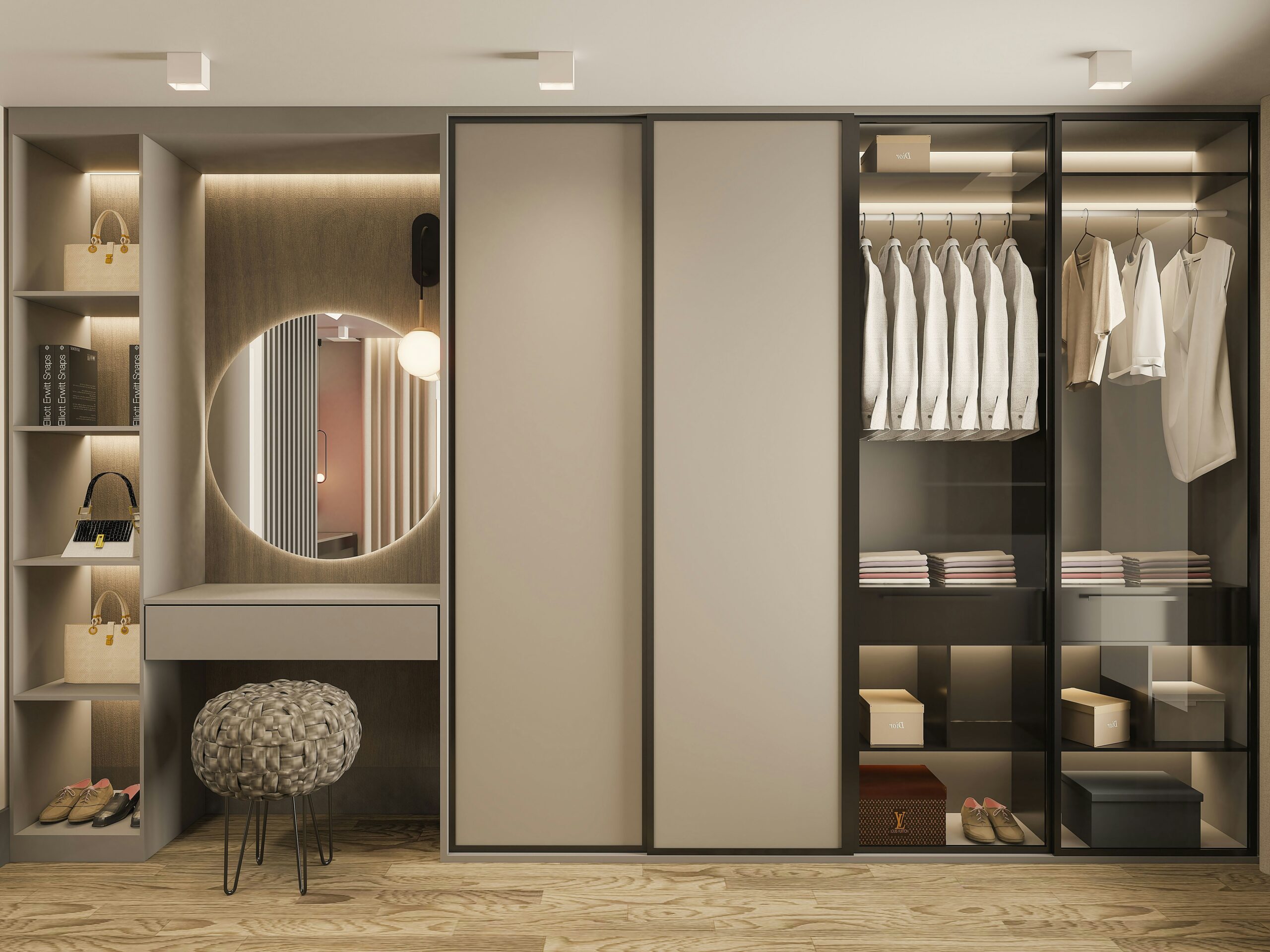
A messy closet can waste more time than you realize. You open the door looking for one specific shirt, move three hangers, pull out a stack of clothes, and somehow end up making an even bigger mess. When you’re already rushing in the morning, that small problem can quickly become frustrating.
I’ve had this happen enough times to realize that a closet doesn’t need to be perfectly styled to work well. It simply needs a system that makes sense when you’re standing in front of it looking for something. Once I stopped organizing clothes according to how a closet looked and started organizing them according to how I actually dressed, getting ready became much easier.
These closet organization ideas focus entirely on arranging the clothes and accessories you already own so you can find them quickly and put them away without creating another mess.
Start With the Way You Actually Use Your Closet
Before moving a single hanger, stand in front of your closet and think about what usually slows you down.
Do you struggle to find everyday tops? Do folded clothes become mixed together after laundry day? Do shoes end up blocking the clothes you need? Or do you keep moving the same items around because there is no obvious place for them? Your answers should determine the organization system.
For example, if you wear work clothes five days a week, keeping them together and within easy reach makes more sense than organizing your entire wardrobe by color. A good closet should reduce decisions, not create more of them.
1. Divide the Closet into Clear Zones
Start by giving each part of the closet a specific job. You might create zones for:
- Everyday clothing
- Work or office clothing
- Occasion clothing
- Jackets and outerwear
- Folded clothing
- Shoes
- Bags and accessories
You don’t need a complicated closet design layout. Even a small wardrobe becomes easier to use when you know exactly where each category belongs.
I like to keep the clothes I reach for most often in the easiest-to-access section. Items that I wear occasionally can go higher, farther back, or into less convenient storage.
This simple change can make a closet feel much more spacious without adding any new furniture.
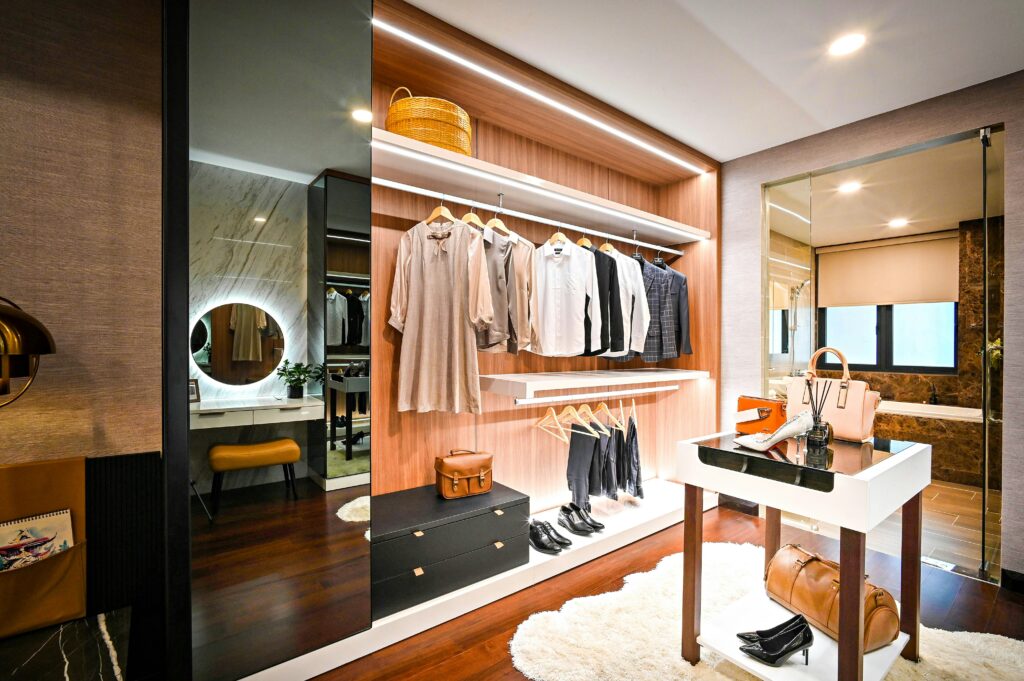
2. Arrange Hanging Clothes in a Way You Can Scan
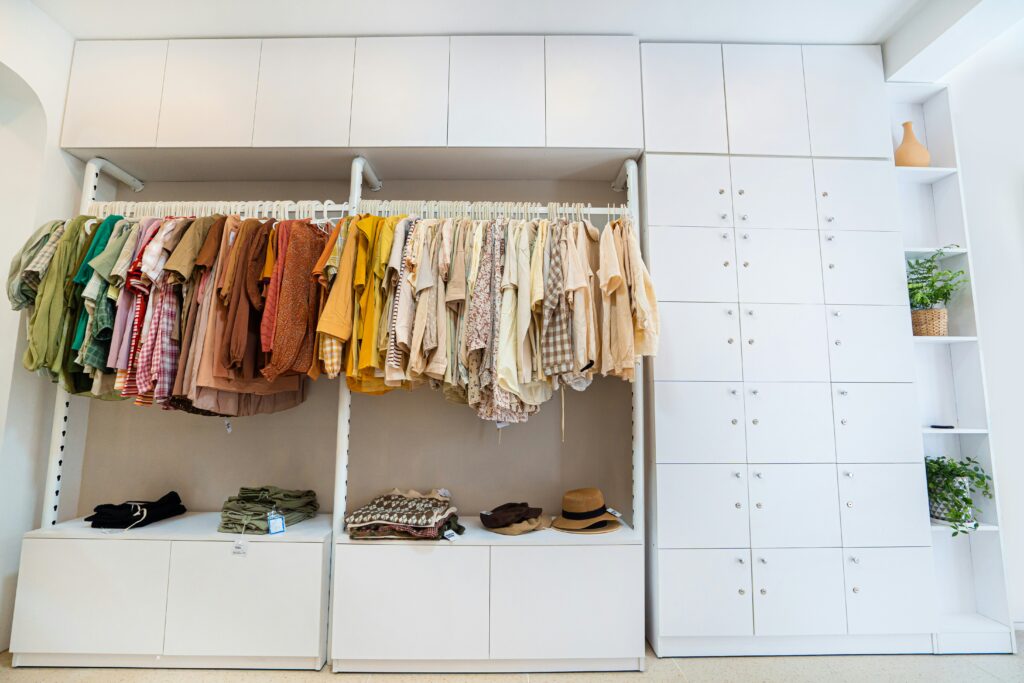
A closet becomes frustrating when every hanger looks like part of one long row. Instead, divide hanging clothes into logical groups. You could arrange them by clothing type, such as:
T-shirts → Shirts → Blouses → Dresses → Jackets
Within each category, you can organize by color if that helps you find things faster.
I prefer category first and color second because I usually know what type of clothing I want before I know exactly which color I want. If I’m looking for a black blouse, I can go directly to the blouse section instead of scanning the entire closet.
Matching slim hangers can also help because they create more consistent spacing and make the clothing easier to scan. You don’t need expensive hangers. A basic set with a slim profile works well.
3. Keep Your Most-Used Clothes at Eye Level
Not every part of your closet deserves equal attention. Keep the clothes you wear most often at the easiest height to reach. Reserve higher shelves for seasonal pieces, occasional clothing, or items you don’t need every week. This is particularly useful when you’re working with a small closet.
If you have to reach over several boxes every morning just to find your usual trousers, the storage system is working against you. Move frequently used clothing into the easiest zone instead. This is one of the simplest closet organization ideas small space solutions because it improves accessibility without requiring additional storage.
4. Give Folded Clothes a Consistent System
Folded clothing can become difficult to manage when every drawer or shelf uses a different arrangement. Choose one folding method and use it consistently.
For drawers, I prefer storing clothes vertically rather than stacking everything into one tall pile. You can see each item from above instead of removing the top four pieces to reach the one underneath.
For shelves, you may prefer short stacks organized by category:
- T-shirts
- Tank tops
- Sweaters
- Jeans
- Workout clothing
- Pajamas
If a particular category keeps falling over, use inexpensive shelf dividers. They help separate stacks without requiring another piece of furniture.
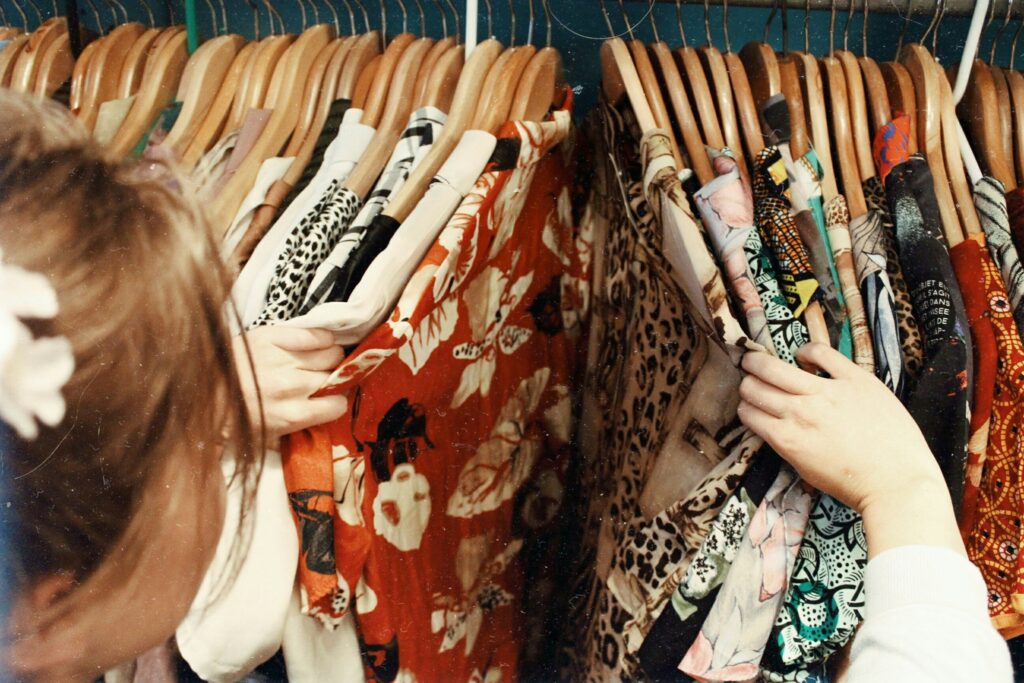
5. Use Drawers for Small Clothing Categories
Drawers work best when you don’t treat them as one large storage box. Use simple drawer dividers for smaller items such as:
- Underwear
- Socks
- Belts
- Scarves
- Accessories
The goal isn’t to create tiny compartments for every individual item. You simply want enough separation to stop categories from mixing. For example, one section can hold everyday socks while another holds tights or specialty socks. This makes laundry easier too because you can put each item directly into its assigned section rather than creating a pile to organize later.
6. Make Shoes Easy to See
Shoes often become a problem because they’re stored at the bottom of the closet in one large pile. If you have enough floor space, use a simple shoe rack so each pair has a visible position.
For a narrow closet, vertical shoe storage can make better use of the available height. An over-the-door shoe organizer can also work for lightweight footwear and accessories.
If you prefer to keep shoes inside boxes, label the outside with a short description or photograph. Otherwise, you’ll end up opening several boxes just to find one pair. The best storage method is the one that lets you identify your shoes without moving everything around.
7. Give Bags and Accessories Their Own Space
Handbags, backpacks, belts, scarves, and hats can quickly fill the remaining gaps in a closet. Instead of allowing them to occupy random shelves, create one dedicated accessory zone.
Hooks can work well for bags because they keep them visible and easy to grab. Small baskets can hold scarves, while drawer dividers can keep belts and smaller accessories together.
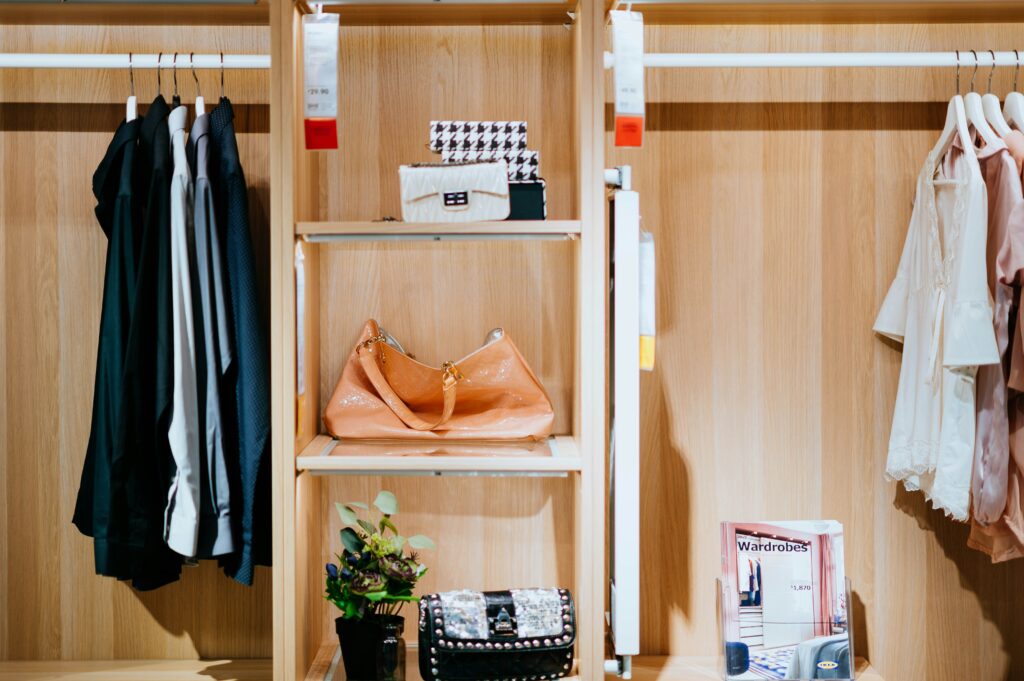
For handbags that need to maintain their shape, shelf storage often works better than hanging them from a narrow hook. Think about how you use each item and choose the storage method accordingly.
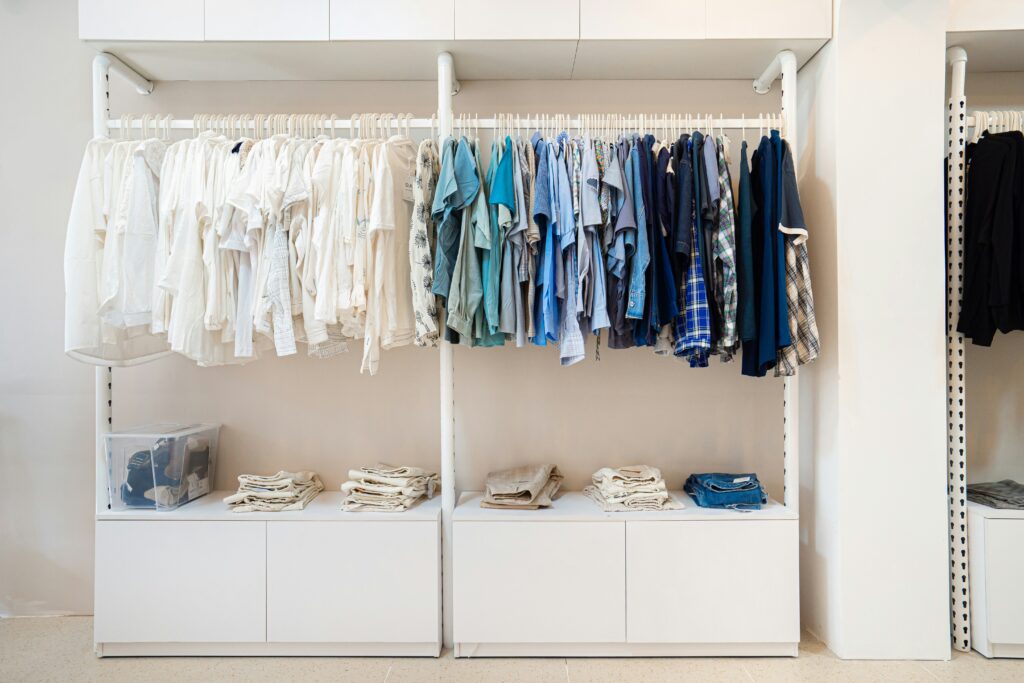
8. Use the Vertical Space You Already Have
One of the most useful closet shelving ideas is simply making better use of unused vertical space. Look above your existing shelves. If there is a large empty gap between a shelf and the ceiling, you may be able to add another shelf or use stackable storage boxes. Shelf risers can also create a second level inside a tall shelf, allowing you to store smaller items without placing everything into one large stack.
However, don’t fill every available centimeter just because you can. Leave enough room to remove clothing comfortably. A storage system that technically holds more but makes everything difficult to reach will eventually become frustrating.
Also read: 7 Space-Saving Shoe Storage Ideas for Any Home
9. Make Seasonal Clothing Easier to Manage
You don’t need your entire wardrobe competing for attention throughout the year. Move less frequently used seasonal clothing toward the back of the closet or into labeled containers when appropriate. For example, during warmer months, heavier sweaters and winter accessories can move to a higher shelf or under-bed storage.
When the season changes, you can switch the locations. Use clear containers when possible so you can see what’s inside without opening every box. If you use opaque containers, add simple labels such as “Winter sweaters” or “Beachwear.”
This small amount of planning can save considerable time during seasonal changes.
10. Create a “Wear Again” Spot
This is one area that many closet systems completely ignore. Sometimes clothing isn’t dirty enough for the laundry basket but isn’t something you want to fold and put away immediately. If you don’t give these clothes a designated place, they usually end up on a chair, bed, or the floor. Create a small “wear again” area using one or two hooks, a valet hook, or a designated section of your closet rod.
Keep this area limited. It should hold clothing you’re genuinely planning to wear again soon, not become another version of the laundry pile.
11. Make Laundry Day Part of the Organization System
A closet can look perfectly organized until clean laundry arrives. Then everything gets folded into random piles because putting it away feels like another large task. The easiest solution is to organize your drawers and shelves so each category has an obvious destination. If socks have one drawer section and T-shirts have another, you don’t need to make decisions while putting laundry away.
I also find it helpful to put hanging clothes away first because they are usually the easiest to sort. Then I move through folded categories one at a time. The goal is to make putting clothes away almost automatic.
Also read: Laundry Room Organization Ideas: Simple Ways to Create a Calm, Functional Space
12. Use a Simple Color System Only Where It Helps
Color coding can make a closet look beautiful, but it isn’t automatically the most practical system.
If you naturally think, “I need a white shirt,” color organization may help you locate it quickly. If you think, “I need a blouse,” organizing by clothing type will probably work better.
You can combine both systems without making the closet complicated. For example:
Blouses: white → beige → pink → blue → black
This gives you the visual benefit of color organization while keeping similar clothing together.
13. Make the Closet Easy to Reset
The best organization system is one you can restore quickly. At the end of the week, spend five to ten minutes checking the closet.
Return misplaced clothing to its correct category, straighten folded stacks, put shoes back in their spaces, and clear the floor. You don’t need to reorganize the entire closet every week.
If the system starts breaking down regularly, that tells you something useful. A category may need a different storage method, or an item may be stored too far from where you naturally use it.
A Few Closet Tricks That Save Time
Try taking a quick photograph of each shelf after you organize it. Keep the photos on your phone as a visual reference when you’re putting laundry away.
Another useful trick is placing the clothes you wear most often on the same section of the closet rod. You can even create a small “weekly rotation” area if you regularly plan outfits in advance.
For shelves, inexpensive shelf dividers can stop folded stacks from leaning into each other. This is especially useful when you have deep shelves where clothes tend to disappear toward the back.
Also read: Decluttering Tips: How to Declutter Your Closet in Just One Weekend
Avoid This Common Closet Organization Mistake
Don’t pack shelves, drawers, and hanging rods as tightly as possible just because you have the available space. Overfilled storage makes it harder to remove one item without disturbing everything around it. It also makes putting clothes away more difficult.
Leave enough breathing room for your hand to remove an item easily. A slightly less full closet that you can maintain is more useful than a perfectly packed one.
What If Your Closet Is Very Small?
A small closet doesn’t require a completely different system. You simply need to prioritize accessibility. Use the highest areas for less frequently used items, add vertical storage where practical, and consider the space behind doors for shoes, scarves, or small accessories.
If your closet contains items you no longer need, handle that separately with a bedroom or closet decluttering routine. Organization works best after you’ve already decided what belongs in the space.
A Few Last Words
The best closet organization ideas don’t require a custom walk-in wardrobe or expensive storage products. Divide your closet into clear zones, organize clothes according to how you actually dress, use vertical space carefully, and give every category an obvious home. Once the system matches your routine, finding clothes takes less time and putting them away becomes much easier too.
Featured image credit: Photo by Billy Jo Catbagan on Unsplash
Leave a Reply