
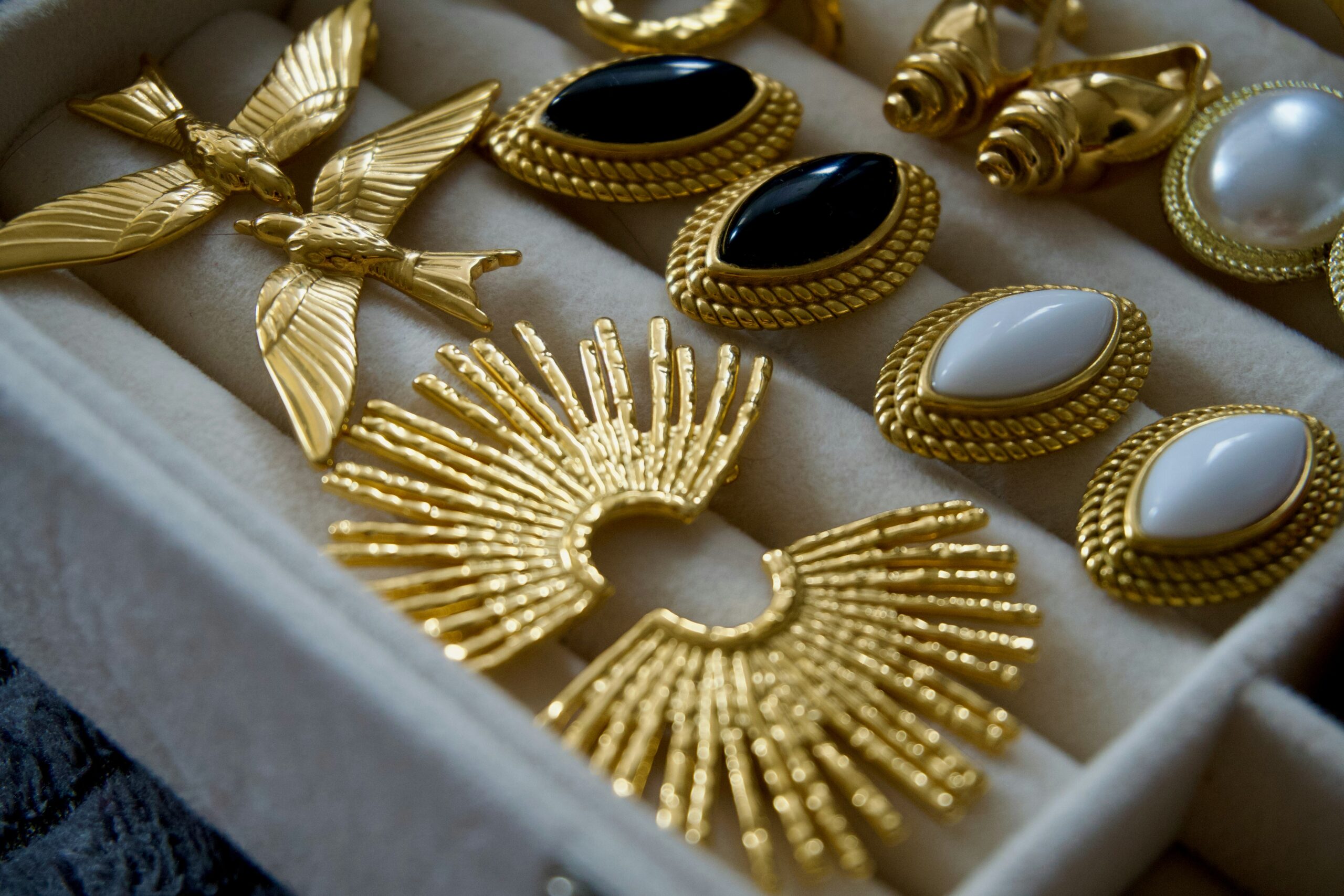
If you have ever spent ten minutes untangling a necklace or searching through a drawer for a matching earring, you already know how frustrating jewelry storage can be. The problem often starts small. A ring gets placed on a nightstand. A bracelet ends up in a makeup bag. Before long, valuable pieces scatter across different parts of your room.
Over time, poor storage can create more than inconvenience. Jewelry can scratch, tarnish, lose stones, become tangled, or even disappear completely. In some cases, improper storage can cost real money when pieces need repair or replacement.
I learned this after repeatedly damaging favorite pieces simply because I did not have a system. Once I created dedicated storage zones, getting ready became easier, and my jewelry stayed in much better condition. These practical jewelry organization ideas can help you create a storage system that works whether you have a small wardrobe, a dresser drawer, or a walk-in closet.
Why Jewelry Gets Messy So Quickly
Jewelry is different from most household items because many pieces are small, delicate, and easy to misplace. Necklaces tangle together. Earrings lose their pairs. Rings disappear into drawer corners. Meanwhile, moisture, dust, and direct sunlight can slowly damage certain materials.
Many people assume they need a larger jewelry collection organizer. In reality, they often need a better system. The goal is to make every piece easy to find, easy to return, and protected while not in use.
Also read: 50 Tiny Things to Declutter That Quietly Make Your Home Feel Messy
1. Sort Jewelry Into Categories Before Organizing
Before buying any jewelry organizer, gather every piece into one location.
Create simple categories:
- Necklaces
- Earrings
- Rings
- Bracelets
- Watches
- Special occasion pieces
- Daily wear items
This step often reveals duplicate items, broken pieces, and forgotten jewelry.
I always recommend starting here because organizing becomes much easier when you know exactly what you own.
2. Separate Everyday Jewelry From Special Pieces
One common storage mistake involves keeping everything together. If you wear the same earrings and necklace every day, store them separately from wedding jewelry, heirlooms, or seasonal accessories.
A small jewelry holder on a vanity or inside a drawer works well for daily pieces. Meanwhile, less frequently used items can stay in a larger organizer. This simple division reduces wear and prevents unnecessary handling of delicate items.
3. Use Drawer Organizers for Small Spaces
If you have limited space, drawer storage often provides the best balance between protection and accessibility. Velvet-lined drawer trays help prevent scratches while keeping items separated. Small compartment organizers work especially well for rings and earrings.
Drawer storage also protects jewelry from dust and sunlight, which can contribute to fading or tarnishing over time.
For people living in apartments or small bedrooms, this remains one of the most practical jewelry storage ideas.
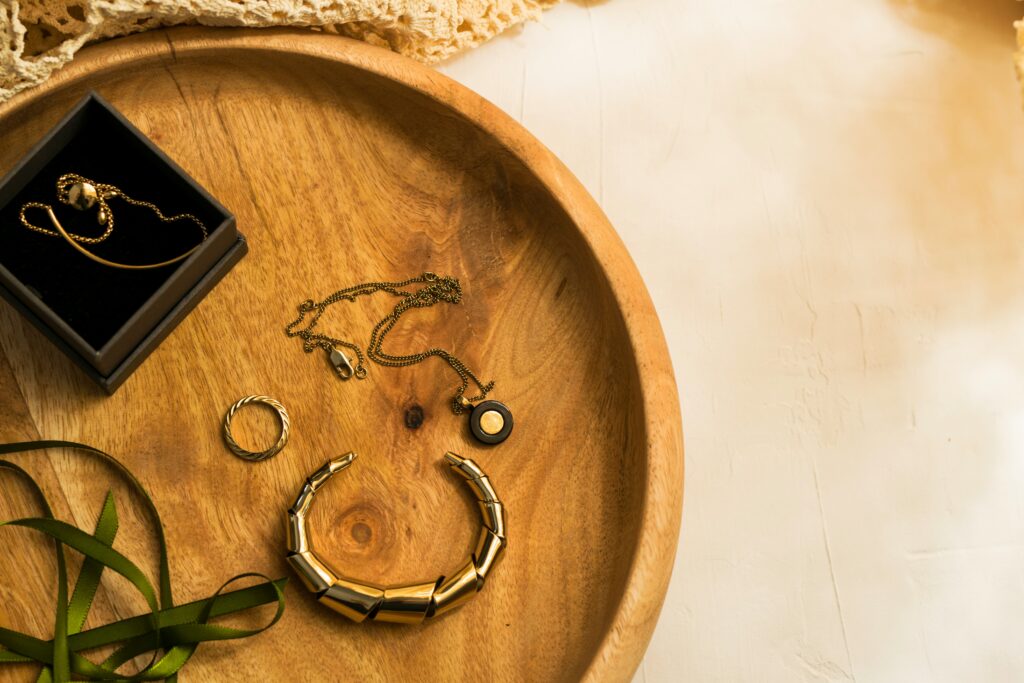
4. Keep Necklaces Hanging Whenever Possible
Necklaces create some of the biggest organization problems because they tangle easily. A hanging jewelry organizer, necklace stand, pegboard display, or wall-mounted jewelry holder allows each chain to hang separately. This prevents knots and makes it easier to see your collection at a glance.
Even a simple over-the-door organizer inside a closet can dramatically reduce tangling problems.
5. Protect Jewelry From Moisture
Moisture is one of the biggest threats to many jewelry materials. According to general guidance from jewelry care professionals, humidity can accelerate tarnishing in silver and affect certain plated pieces. Moist environments may also impact some gemstones over time.
Avoid storing jewelry in bathrooms whenever possible. While bathrooms seem convenient, frequent steam and humidity create an environment that can shorten the lifespan of some pieces. Instead, choose a dry bedroom drawer, wardrobe, or closet area.
6. Create Jewelry Zones Inside Your Closet
If you have a walk-in closet or larger wardrobe, consider creating dedicated jewelry zones. You might use:
- Drawer inserts for rings
- Hanging organizers for necklaces
- Small trays for bracelets
- Lidded boxes for fine jewelry
When every category has its own location, getting dressed becomes much faster. This approach also helps prevent accidental damage caused by stacking different jewelry types together.
Also read: Decluttering Tips: How to Declutter Your Closet in Just One Weekend
7. Store Fine Jewelry Separately
Fine jewelry deserves extra protection. Gold, diamonds, pearls, and gemstone pieces often represent significant financial value. Even minor scratches can affect appearance and resale value. Store these pieces in soft-lined compartments, jewelry boxes, or individual pouches.
A good rule is simple: if replacing the item would be expensive, give it its own storage space.
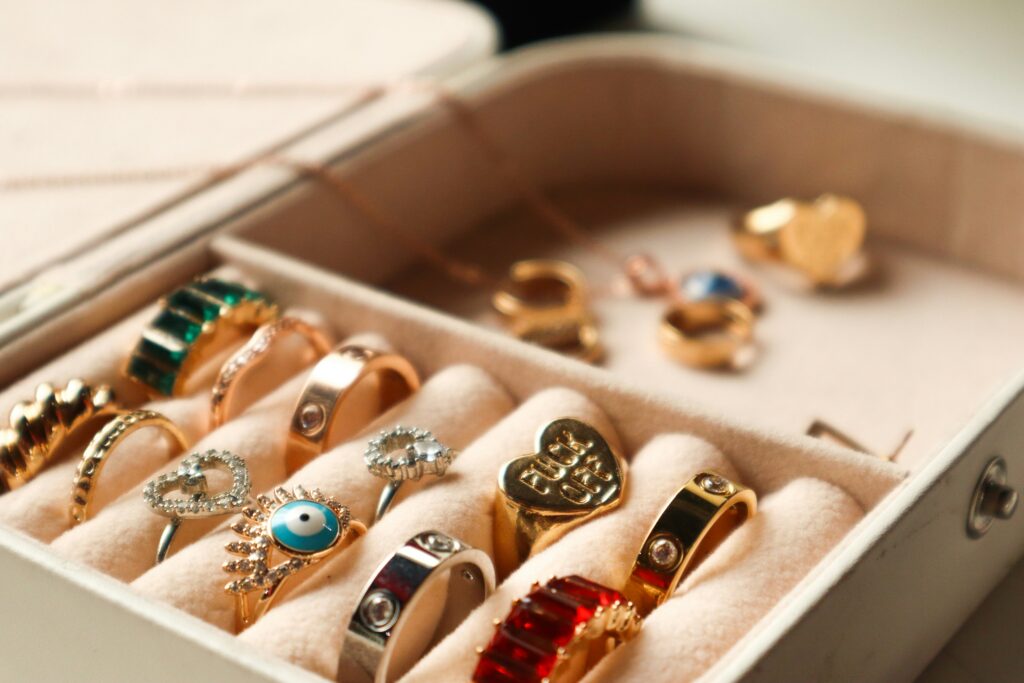
8. Give Earrings Their Own Dedicated System
Few things create frustration faster than losing one earring from a pair. Dedicated earring trays, card holders, acrylic organizers, or compartment boxes keep pairs together.
I learned long ago that tossing earrings into a single bowl almost guarantees missing pieces later. The small effort of storing pairs together saves considerable time in the future.
9. Consider Open Storage for Costume Jewelry
Not all jewelry requires enclosed storage. Costume jewelry often works well on decorative stands, trays, or wall displays. These displays double as room decor while keeping frequently worn pieces accessible.
However, reserve this approach for lower-value items. Fine jewelry generally benefits from more protection.
10. Use Soft Materials to Prevent Scratches
Hard surfaces can damage jewelry over time. Velvet trays, felt-lined compartments, padded boxes, and fabric pouches help protect delicate finishes. This matters especially for gemstones, pearls, plated jewelry, and polished metals.
The storage material itself often affects long-term condition just as much as the organizer design.
11. Make Travel Storage Part of Your System
Many people organize their jewelry perfectly at home but forget about travel. Keep a small travel jewelry case ready with dedicated spaces for rings, earrings, and necklaces. This prevents last-minute packing mistakes and reduces the risk of tangles while traveling.
A compact travel case also works well for storing seasonal pieces at home.
12. Try Simple DIY Solutions Before Buying More Products
You do not always need specialized organizers. Ice cube trays, divided kitchen containers, small gift boxes, and decorative dishes can provide surprisingly effective storage.
The most important factor is separation. Once pieces stop rubbing, tangling, and stacking together, organization improves significantly. Simple solutions often work just as well as expensive storage systems.
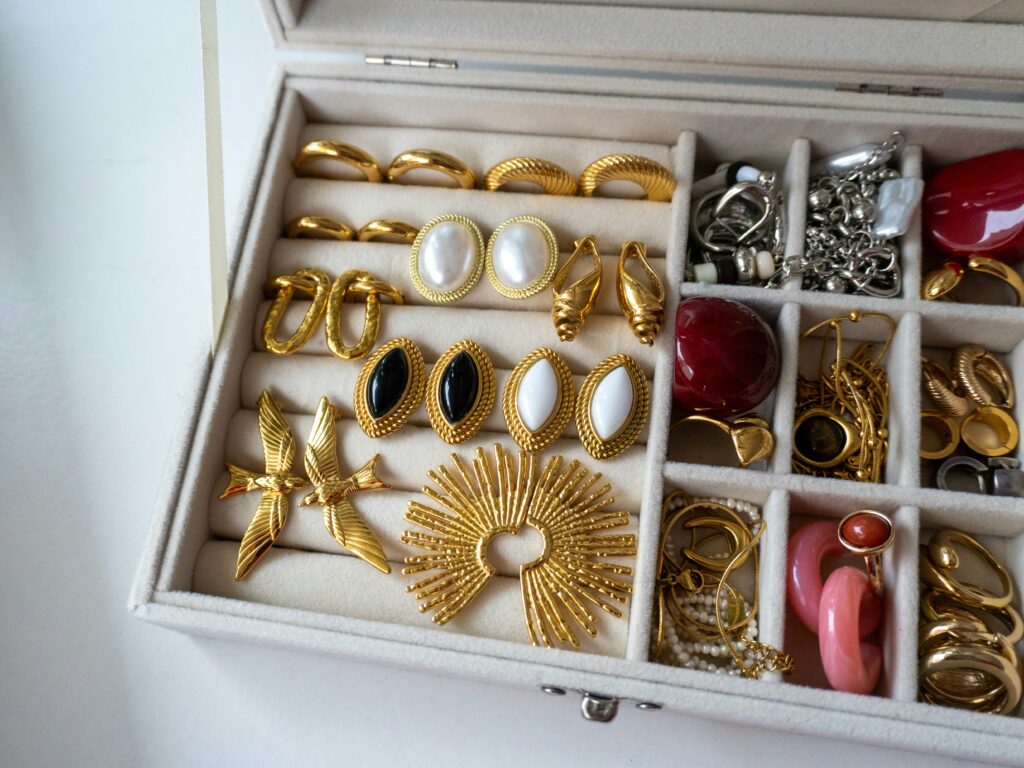
13. Label Hidden Storage Areas
If you use multiple drawers or boxes, consider adding labels. Labels help family members return items correctly and prevent you from forgetting where certain pieces belong. This becomes especially useful for larger collections.
The goal is not perfection. The goal is reducing decision-making each time you put jewelry away.
What Works Best for Small Spaces
Many people assume they need a large vanity or walk-in closet for proper jewelry organization. In my experience, small-space systems often work better because they encourage intentional storage. A single organized drawer with dividers can outperform a large, cluttered jewelry cabinet.
A Simple Jewelry Storage Hack
Place a few silica gel packets inside jewelry boxes or drawers. These small moisture absorbers often come with shoes and electronics. They help reduce humidity around stored jewelry and may slow tarnishing in certain metals.
What to Be Careful About
Avoid storing jewelry in direct sunlight, bathrooms, or crowded containers. Heat, moisture, friction, and tangling can shorten the life of your collection. Also avoid stacking necklaces and bracelets together, even temporarily, because knots often become harder to remove than expected.
A Thought on Protecting Your Investment
Many people focus on organizing jewelry so it looks pretty. While appearance matters, protection matters more. A good storage system does not simply display your collection. It helps preserve pieces so they stay wearable and valuable for years.
The best jewelry organization ideas combine visibility, protection, and simplicity. Whether you use a drawer organizer, a closet storage system, or a compact jewelry holder, the goal remains the same: make every piece easy to find and safe to store. Start with one category at a time, create dedicated storage zones, and your jewelry collection will become easier to manage and better protected from everyday damage.
Featured image credit: Photo by Aliona Zahrai on Unsplash
Leave a Reply