

Imagine this: you stepped on another Lego this morning. There’s a stuffed animal on the kitchen counter. And somehow, the living room looks like a toy store exploded in it — again. If that sounds familiar, you are not alone. Kids’ toys organization is one of those tasks that feels impossible no matter how many times you try. You clean it up. They undo it in twenty minutes. You clean it again. The cycle never ends.
But here’s the thing: most of the advice out there tells you the same stuff. Get some bins. Label them. Done. Except it’s never actually done, is it?
So let’s skip the obvious and talk about the smart, slightly different kids’ toys organization ideas that real moms are using to keep things under control — without losing their minds in the process.
1. Stop Organizing and Start Purging First
Here’s where most people go wrong. They try to organize everything they already have. But if you have too many toys, no system in the world will save you.
Before you buy a single bin or basket, do a purge. Go through all the toys and make three piles: keep, donate, and toss. Keep means your kid plays with it regularly. Donate means it’s in good shape but forgotten. Toss means it’s broken, missing pieces, or a mystery item nobody can identify.
A good rule of thumb: if a toy hasn’t been touched in three months, it doesn’t need prime real estate in your living room.
Do this before the holidays. Do it before birthdays. Make it a habit twice a year, not a once-every-few-years panic.
Also read: Decluttering Tips: How to Declutter Your Closet in Just One Weekend
2. Try Toy Rotation — It’s a Game Changer
This is the single most underrated kids toys organization idea out there, and it genuinely works.
Here’s how it goes: instead of keeping all the toys out at once, you divide them into two or three groups and only keep one group accessible at a time. The other groups go into labeled bins stored in a closet, a garage, or under a bed.
Every few weeks, you swap them out. Suddenly, the toys that have been sitting in storage feel brand new to your kids. They get excited. They play longer. And you have half the mess to deal with on any given day.
This method also reduces overstimulation. When kids have too many choices, they actually play less and wander more. Fewer toys out means better focus and more creative play.
You don’t need a fancy schedule. Just pay attention. When your kids seem bored or stop engaging with what’s out, that’s your cue to rotate. Popular home organization blog IHeart Organizing has long championed this approach, noting that kids thrive when their space feels manageable rather than overwhelming.
3. Use the “One In, One Out” Rule Without Negotiation
Every time a new toy enters the house — from a birthday, a holiday, a happy meal — one toy leaves. No exceptions.
This sounds strict. It is a little strict. But it works. It keeps the total volume of toys from creeping up over time, which is usually how things spiral out of control in the first place.
The key is to involve your kids in the process. Give them the choice of what stays and what goes. Kids who have a say in the process are far more cooperative than kids who feel like things are being taken from them without warning.
Frame donating as a positive thing. You’re giving those toys to kids who don’t have as many. That’s something worth feeling good about.
Also read: 15 Pantry Organization Hacks That Actually Work
4. Ditch the Toy Box
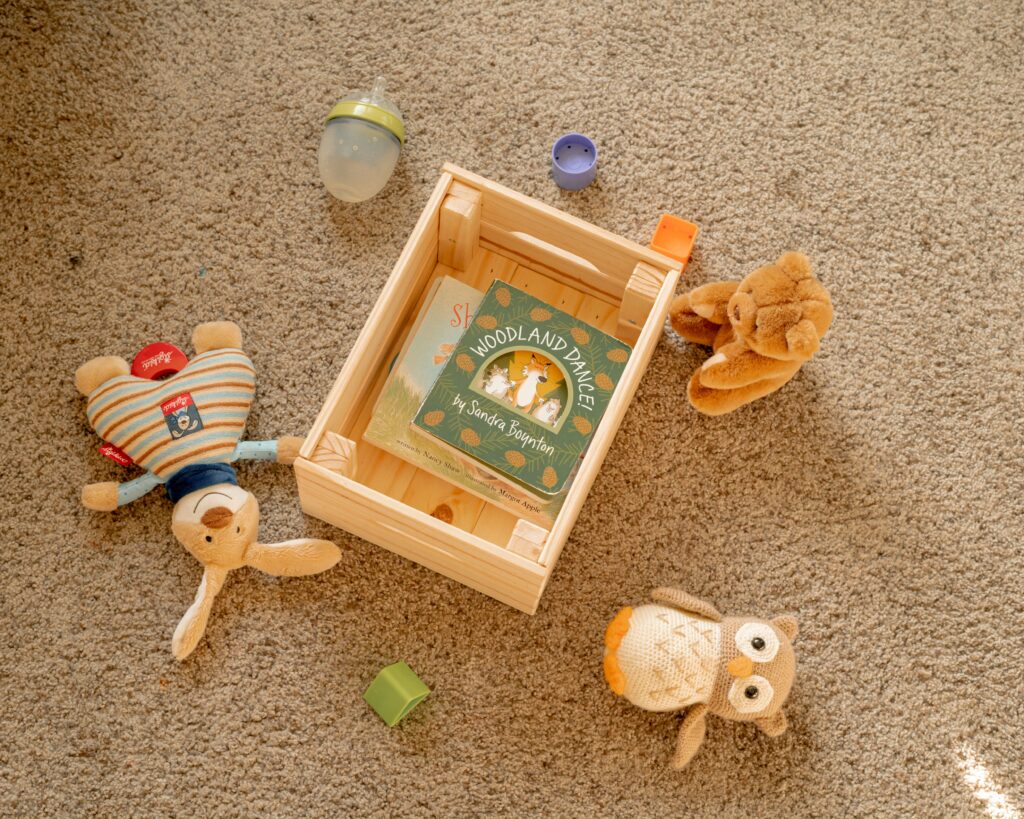
The classic toy box is actually one of the worst kids toys storage solutions out there. Everything gets dumped in, nothing is findable, and your kid ends up emptying the whole thing onto the floor just to find one item.
Instead, switch to open bins or baskets organized by category. Each bin holds one type of toy: one for Legos, one for cars, one for art supplies, one for dolls. Kids can see exactly what’s in each bin without digging. Cleanup becomes a sorting game rather than a chaotic dumping session.
Clear bins are especially useful for smaller kids. When they can see what’s inside, they’re much more likely to put things back where they belong.
For younger kids who can’t read yet, skip the word labels. Use picture labels instead. Print or draw a simple image of what goes inside and tape it to the front. It’s a surprisingly effective trick that keeps your kids in charge of their own cleanup.
5. Create a “Dump Zone” That’s Actually Decorative
Let’s be real. There will always be days when full cleanup isn’t happening. Life is busy. You’re tired. The kids are tired.
Instead of fighting it, plan for it.
Pick one or two large decorative baskets and place them strategically in your living room. These are the dump zones. At the end of a busy day, everything gets tossed into those baskets for a quick sweep. Your living room looks tidy enough. You’re not stressed. Everyone wins.
Then, a couple times a week, you sort the baskets and return things to their proper homes. It’s not a perfect system, but it’s a realistic one. And realistic beats perfect every single time.
This is one of the best kids toys storage ideas in living room settings because the baskets can actually look like intentional decor. Choose woven seagrass or neutral canvas tones, and nobody walking into your home will even realize they’re a toy catch-all.
6. Think Vertical and Hidden
If you’re living in a smaller home or apartment, floor space is precious. That means it’s time to think upward and inward.
Wall-mounted hooks with fabric bags are a great option for bulkier items like stuffed animals or dress-up accessories. A stuffed animal hammock hung in a corner of a bedroom frees up an enormous amount of floor space while keeping everything contained and visible.
Under-bed storage is another wildly underused resource. Low-profile rolling bins slide right under most bed frames. Use them for board games, larger toys, or seasonal items. Out of sight means out of the chaos, and rolling bins make it easy enough that even your kids can do it themselves.
Ottomans with storage lids work brilliantly in living rooms. They double as seating and a coffee table while hiding toys inside. The trick is to organize inside the ottoman with smaller canvas bins so it doesn’t just become a jumbled mess with a lid on it.
Also read: 7 Space-Saving Shoe Storage Ideas for Any Home
7. Solve the Small Piece Problem Once and for All
Legos. Puzzle pieces. Tiny game components. These are the arch-nemesis of every parent who has ever tried to keep things organized.
The best solution for small-piece toys is mesh zipper bags or small clear pouches. Each game, puzzle, or set gets its own bag. Everything stays together. Nothing gets mixed in with something else.
For Lego specifically, consider storing by color or set rather than dumping everything into one giant bin. It takes a bit more setup initially, but it saves enormous amounts of time when your kid wants to build something specific and can actually find the pieces they need.
Art supplies deserve their own system entirely. A rolling cart with drawers keeps markers, crayons, glue, and scissors all in one place that can be pulled out during craft time and rolled back when done. No more supplies scattered across three different rooms.
8. Make Cleanup Part of the Routine, Not a Punishment
Even the best kids toys organization ideas will fall apart if cleanup feels like a chore kids dread.
Build a short cleanup into the daily routine. Five minutes before dinner. Ten minutes before bath time. Whatever works for your family. Make it consistent. Consistency is what turns it from a battle into just a thing that happens.
Use a simple timer. Tell your kids they have five minutes to put everything away. It turns cleanup into a mini race. Most kids actually respond well to this. It feels like a game rather than a task.
For younger kids, be specific. “Clean up” is vague. “Put the Legos in the blue bin” is something they can actually do. Break it down into one small action at a time until they understand the system.
Putting It All Together
The best kids toys storage ideas aren’t the prettiest or the most expensive. They’re the ones that fit how your family actually lives.
You don’t need a dedicated playroom. You don’t need to spend hundreds of dollars on matching bins. You need a realistic system that reduces the total amount of stuff, gives everything a home, and makes cleanup simple enough that your kids can actually do it themselves.
Start with the purge. Then rotate. Add some dump zones. Go vertical. Solve the small-piece problem. And build cleanup into the daily rhythm.
You won’t wake up tomorrow to a spotless house. But with the right kids toys organization ideas in place, you will wake up to a home that feels a whole lot calmer — and a version of yourself that isn’t one Lego underfoot away from a breakdown.
That’s a win worth organizing for.
Featured image credit: Photo by Vanessa Bucceri on Unsplash





Leave a Reply