

If you are a busy professional living in a small apartment, you already know the struggle. Bills on the counter. Contracts on the coffee table. Random receipts stuffed into a drawer. Decluttering paperwork can feel impossible when you barely have room to breathe, let alone file.
But here is the thing. Paper clutter is not really a paper problem. It is a decision problem. Every pile sitting on your desk represents a choice you have not made yet. And that backlog quietly drains your energy every single day.
I have been there. I once found a utility bill from three years ago buried under a stack of “important” papers. It was not important. It was just never dealt with. After trying every trick in the book, I landed on six systems that actually work, especially for people short on time and space. Let us dig in.
System 1: The Great Paper Purge (Start Here)
Before any real decluttering tips can help you, you need to face the pile. All of it.
Grab a laundry basket and walk through your home. Collect every single piece of paper you can find. Check kitchen counters, junk drawers, nightstands, and bags. Dump everything onto a large flat surface like your dining table.
Then sort into three piles: Keep, Shred, and Recycle. Be ruthless. Ask yourself, “Under what circumstances would I actually need this?” If you cannot think of a reason, let it go. Old instruction manuals, expired warranties, utility bills older than a year. Recycle them. Anything with your name or financial information? Shred it before it goes in the bin to protect against identity theft.
This one-time purge is the foundation. You cannot build a good system on top of chaos.
System 2: The KonMari Paper Method
Marie Kondo’s approach to decluttering paperwork is simple and surprisingly effective. Her rule is: discard everything unless it falls into one of three categories. Papers currently in use. Papers needed for a limited time. Papers you must keep indefinitely.
That is it. No gray areas.
In practice, this means your takeout menus go. Your decade-old lease agreement goes. Your birthday cards from people who are no longer in your life? Gone, if they do not bring you genuine joy.
What stays: tax documents, medical records, insurance policies, and legal documents. For those, create a slim binder or a small accordion folder, which is perfect for limited spaces. Label it “Essentials.” Everything important lives there, and only there.
This method works beautifully for people who tend to over-keep. As a declutter checklist starting point, it forces you to make a real decision about every single page.
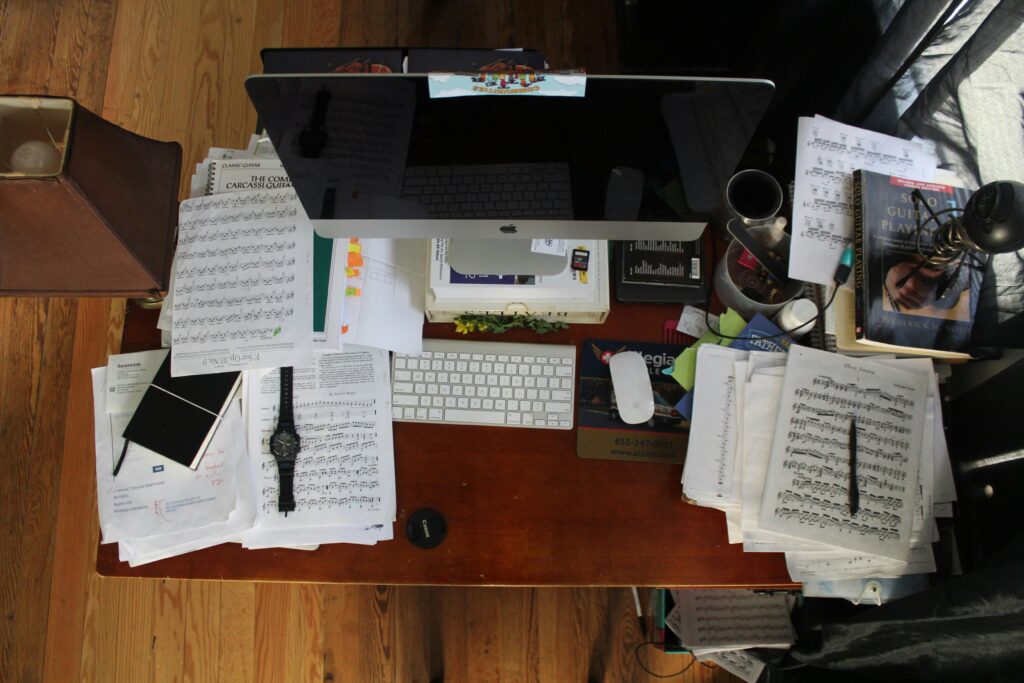
System 3: The Four-Box Action System
This is one of the best decluttering ideas for ongoing paper management. Instead of letting paper pile up, you intercept it the moment it enters your home.
Set up four small boxes or trays, labeled: To Do, To File, To Read, and To Shred. When a piece of paper comes in, it immediately goes into one of those four boxes. Nothing sits loose on a surface.
Then, once a week, spend 20 minutes going through each box. Pay the bills from your To Do box. File documents from your To File box. Flip through your To Read pile and toss what you did not get to. Shred the rest.
The power of this system is that it removes the decision fatigue of the pile. You already know what each box means. You just act on it.
System 4: The Paperless Digital System
One of the most underrated decluttering tips for busy professionals is simply going paperless wherever you can.
Start by switching all your bills, bank statements, and subscription notices to digital delivery. Log into each account and choose the paperless option. This alone cuts incoming paper by a huge percentage.
Next, scan the documents you need to keep. A free app like Adobe Scan or Microsoft Lens turns your phone camera into a scanner in seconds. Store everything in a cloud folder, organized by category: Taxes, Medical, Home, Legal. Use Google Drive or Dropbox with a strong password.
For documents you must keep as physical originals, such as your passport, birth certificate, or property deed, store them in a small fireproof box. These are the only papers that truly earn real estate in your limited space.
The popular home organization blog A Bowl Full of Lemons recommends logging into your accounts and choosing paperless options at the same time you are purging, so the two-step process happens together. It is smart advice that saves double the future effort.
System 5: The Weekly 20-Minute Maintenance Routine
Here is the honest truth about decluttering paperwork. It is not a one-time event. It is an ongoing habit.
The reason most people end up buried in paper again is that they do a big clean-out and then stop. Two months later, the pile is back.
The fix is a short, consistent routine. Every week, set a 20-minute timer. Go through your inbox tray. File what needs filing. Toss what is trash. Sign what needs signing. That is all.
Because the sessions are short, they feel manageable. And because they happen every week, nothing builds up enough to become overwhelming. Even on your busiest week, you can find 20 minutes. Think of it as a standing appointment with your future, calmer self.
You can pair this routine with something you already do. Some people sort papers while watching the news. Others do it on Sunday evenings before the week starts. Attach it to an existing habit and it sticks.
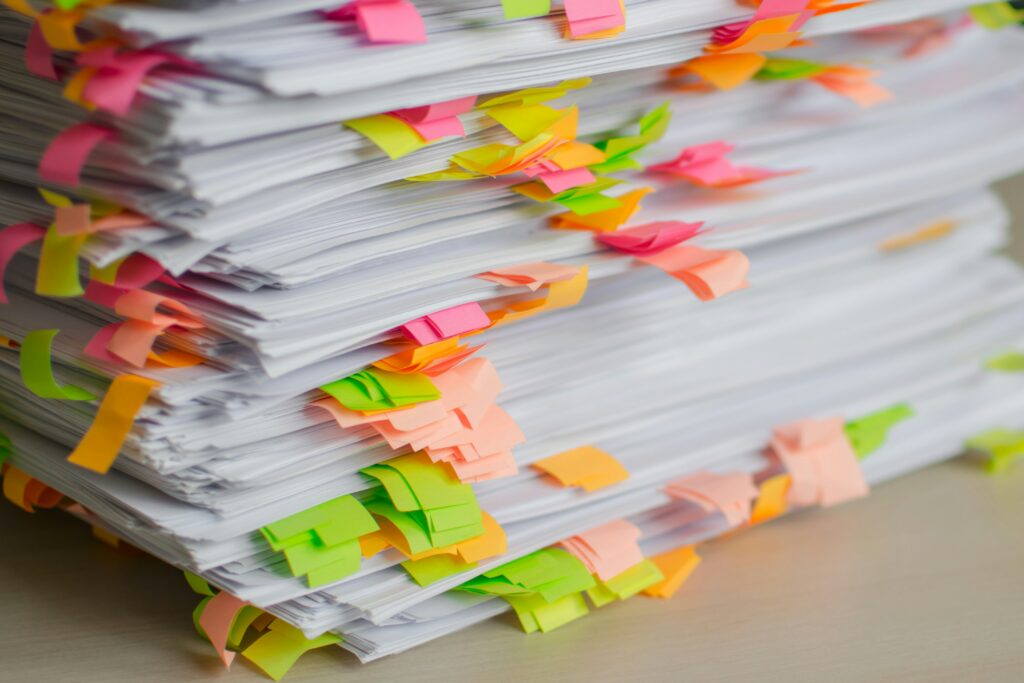
System 6: The One-In-One-Out Rule
This is one of those simple decluttering ideas that sounds too easy but genuinely works. For every new document you bring into your space, one old one leaves.
Got a new insurance policy? Shred the old one. Filed your 2024 tax return? The 2017 return (now past the recommended 7-year retention window) can go. Added a new receipt folder? Purge the oldest receipts you no longer need.
This rule is especially powerful in small spaces because it creates a natural ceiling. Your paper collection can never grow beyond its current size. Furthermore, it keeps your declutter checklist simple. New in, old out. Every single time.
Over time, this system quietly maintains all the hard work you put into the purge. You do not have to schedule a big clean-out session again. The ongoing balance does the work for you.
Before You Start: A Quick Declutter Checklist
To bring it all together, here is a quick checklist to guide you through the process.
- Collect all paper from every corner of your home.
- Sort into Keep, Shred, and Recycle piles.
- Set up your four-box action system by your entryway or desk.
- Switch all bills and statements to paperless.
- Scan important documents and store them digitally.
- Place original vital documents in a fireproof box.
- Schedule a weekly 20-minute paper session.
- Apply the one-in-one-out rule going forward.
You do not have to do all of this in one afternoon. Start with the purge. Then set up one system at a time. Progress, not perfection, is what creates lasting change.
Also read: Decluttering Tips: How to Declutter Your Closet in Just One Weekend
One Last Thing
If you are feeling overwhelmed right now, that is completely normal. Paper clutter is one of the sneakiest kinds of mess because it does not feel urgent the way a dirty kitchen does. But it costs you time, stress, and mental energy every single day.
The good news? You already have everything you need to fix it. You do not need a fancy filing cabinet or color-coded binders. You just need a decision and 20 minutes to get started.
Decluttering paperwork in a small space is absolutely doable. These six systems are proof of that. Pick one, start today, and watch how much lighter your space, and your mind, begins to feel.
Featured image credit: Photo by Nick Sorockin on Unsplash












Leave a Reply